Rockets
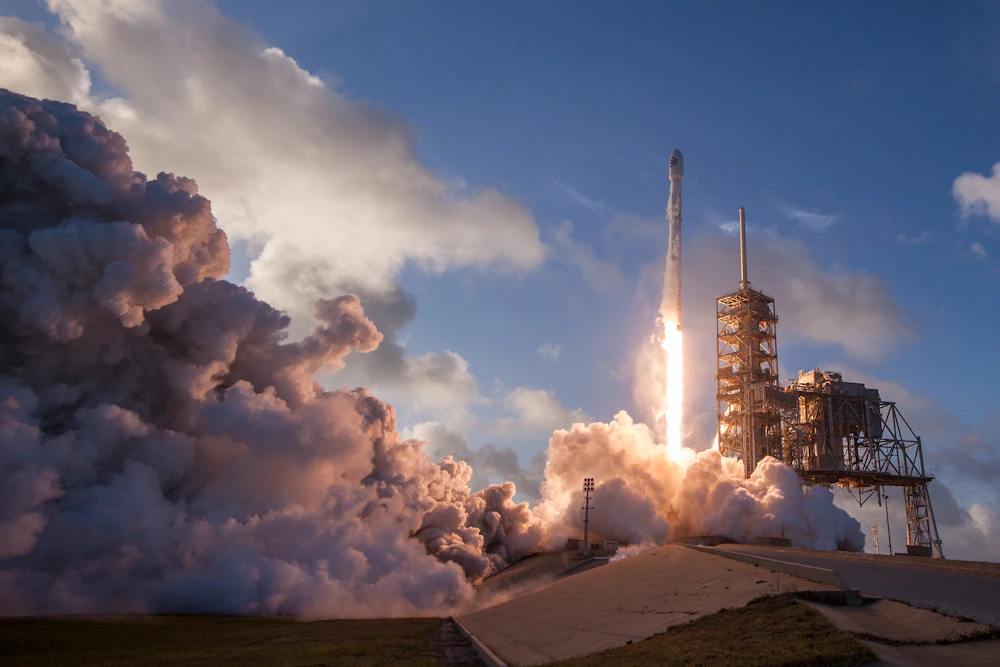
Rockets are powerful launch vehicles designed to overcome Earth's gravity and carry payloads into space. Multi-stage engineering, fuel chemistry, guidance computers, and heat-resistant structures all work together so missions can place satellites in orbit, deliver cargo to stations, and support deep-space exploration.
Build Your Own Model Rocket
- Choose a kit or gather materials — pick a beginner Estes rocket kit, or source a cardboard body tube, balsa fins, and a plastic nose cone.
- Build the body tube — cut the tube to length, sand any rough edges, and mark fin placement lines evenly around the base.
- Attach the fins — glue balsa or plastic fins to the base of the tube using wood glue or epoxy; let cure fully before handling.
- Install the motor mount — slide the engine mount tube into the bottom of the body tube and secure it with glue; attach the motor hook.
- Add recovery wadding and parachute — fold a small parachute and attach shroud lines to the nose cone; pack it inside the top of the tube with fireproof recovery wadding underneath.
- Paint and decorate — apply primer, then paint in your chosen colours; add stickers or decals when dry.
- Insert the engine — load a recommended engine (e.g. Estes C6-5) into the motor mount just before launch.
- Launch safely — set up a launch rod and controller on open flat ground away from people, connect the igniter, move to the safety distance (at least 15 m), and press the launch button.
All NASA Rockets Archive
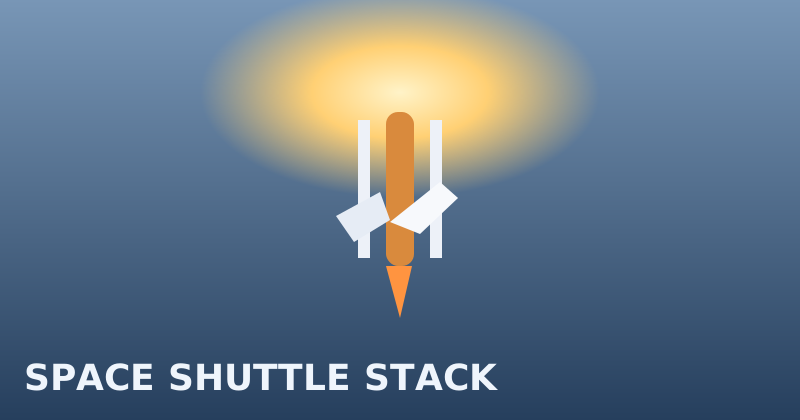
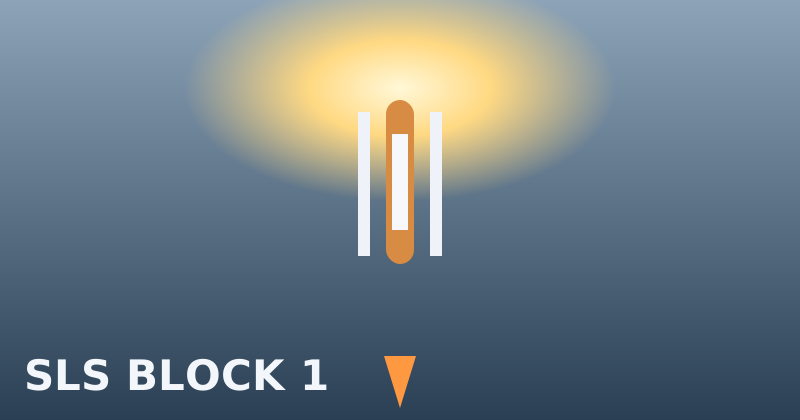
Scroll through the rocket list and open each one for facts plus a labeled blueprint of the main pieces.